Things with teeth 🦷!
At Mole Group Utilities, one of the most important tools in our Horizontal Directional Drilling (HDD) fleet is the reamer. While it might not look like much, it's responsible for turning a small pilot hole into a large enough bore to safely install ducts, pipes, and cables beneath roads, rivers, railways and other obstacles.
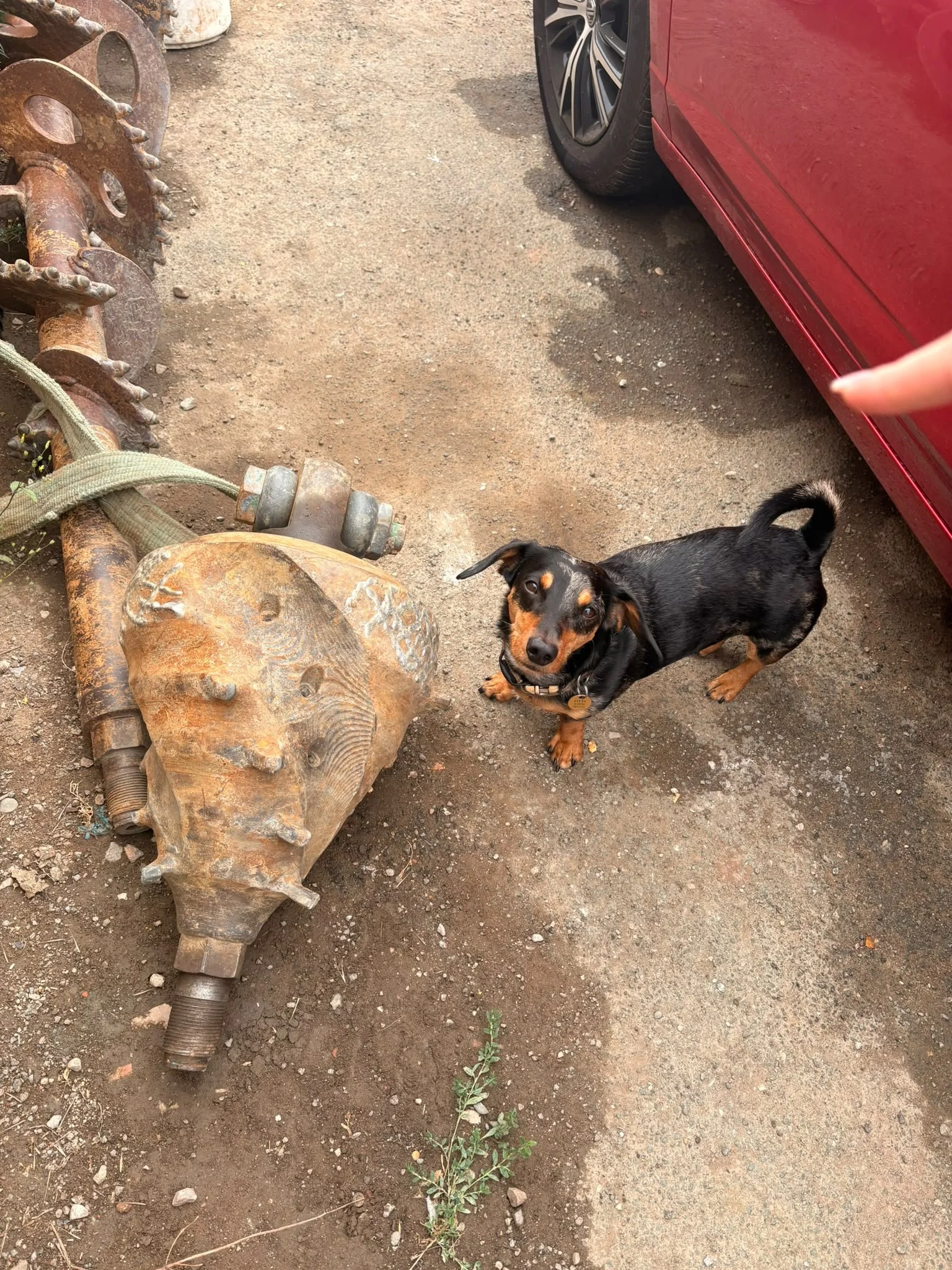
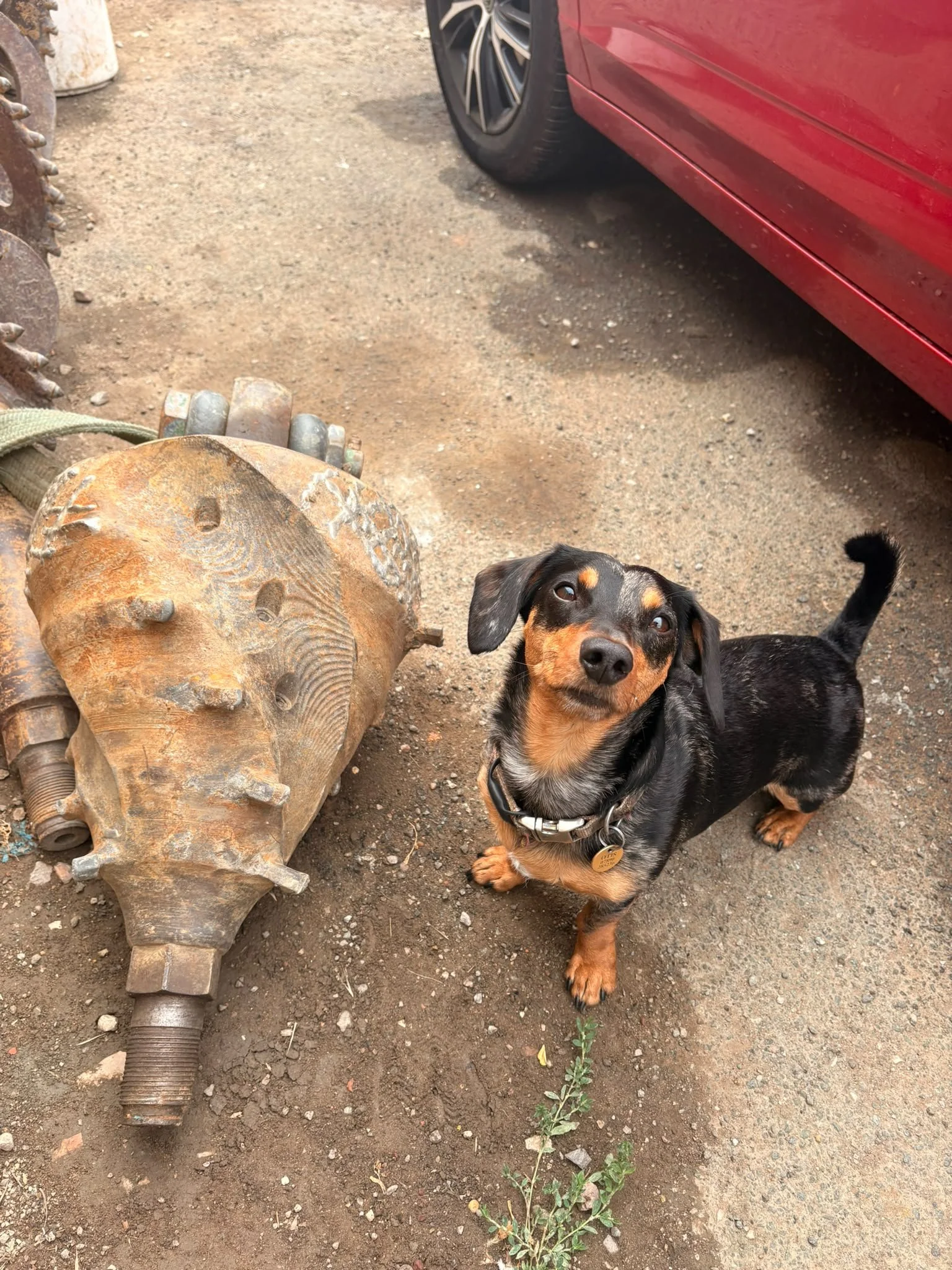
In the photo, our trusty site supervisor Otis is inspecting one of our larger reamers before it heads back to work!
What is a Reamer?
A reamer is a specialist HDD attachment connected to the drill rods after the pilot bore has been completed. As it is pulled back through the ground, it enlarges the pilot hole to the required diameter ready for the product pipe or duct to be installed.
Depending on the size of the final pipe, several reaming passes may be required, gradually increasing the hole size each time.
What Are the "Spiky Bits"?
Those hardened metal projections are called teeth.
The teeth are designed to:
Break through soil and rock.
Cut and loosen the ground.
Help mix drilling fluid with excavated material.
Keep the bore stable during pullback.
Because the teeth are constantly grinding through abrasive ground conditions, they wear down over time.
Rather than replacing the entire reamer, we simply remove the worn teeth and fit new replacement teeth, keeping the tool performing at its best while reducing costs and downtime.
How Heavy Is This Reamer?
The reamer shown is a large rock reamer used on bigger HDD projects.
⚖️ Weight: Around 800–1,200 kg (depending on the exact model and configuration).
📏 Diameter: Typically 500–700 mm.
🔩 Built from high-strength alloy steel to withstand extreme underground conditions.
It takes lifting equipment to safely move and position a reamer of this size.
Where Is It Used?
Reamers are commonly used when installing:
💧 Water mains
⚡ Electric cables
🌐 Fibre optic ducts
🔥 Gas mains
🚧 Road and rail crossings
🌊 River crossings
Without a reamer, the pilot hole would simply be too small for the product pipe to pass through.
Did You Know?
A reamer can encounter thousands of tonnes of resistance during a pullback.
Different ground conditions require different styles of reamer.
Worn teeth reduce drilling efficiency and increase wear on the drilling rig, which is why regular inspections are essential.
At Mole Group Utilities, we routinely inspect our reamers and replace worn teeth to ensure every bore is completed safely, efficiently and to the highest standard.
Built to Bore. Maintained to Perform.
At Mole Group Utilities, looking after our equipment is just as important as operating it. Regular maintenance, including replacing worn reamer teeth, helps us deliver safe, reliable and efficient HDD installations on every project.
Even Otis agrees – a well-maintained reamer is always ready for the next bore! 🐾